
The start in Bourg d'Oisans at 6am is genuinely exciting — 7,000 cyclists, warm July air already thick with energy drink and embrocation, everyone trying to look casual about what lies ahead. I had trained for six months for this. I had ridden the Galibier twice in training, Alpe d'Huez three times. I told myself I was ready. The Croix de Fer had other ideas.
The Croix de Fer: Your First Examiner
The Croix de Fer comes before you have warmed up properly — 23 kilometres at an average of 5.2%, but with several ramps above 10% that feel deeply unkind at kilometre 45. I made the classic mistake of going too hard in the valley section and arrived at the foot of the real climbing with legs already complaining. Note for next year: patience on the flat is not laziness, it is strategy.
"The Galibier at 2,642 metres is where La Marmotte reveals its true character. By the time you reach the base, 140 kilometres are in your legs, and the climb still asks for everything you have left."
The descent to Valloire between the Télégraphe and Galibier is one of cycling's great gifts — fast, wide, and smooth, with the Galibier wall rising ahead of you like a challenge you cannot refuse. I ate two gels and a half sandwich at the feed stop and told myself lies about feeling good.
Alpe d'Huez: Twenty-One Bends of Pure Emotion
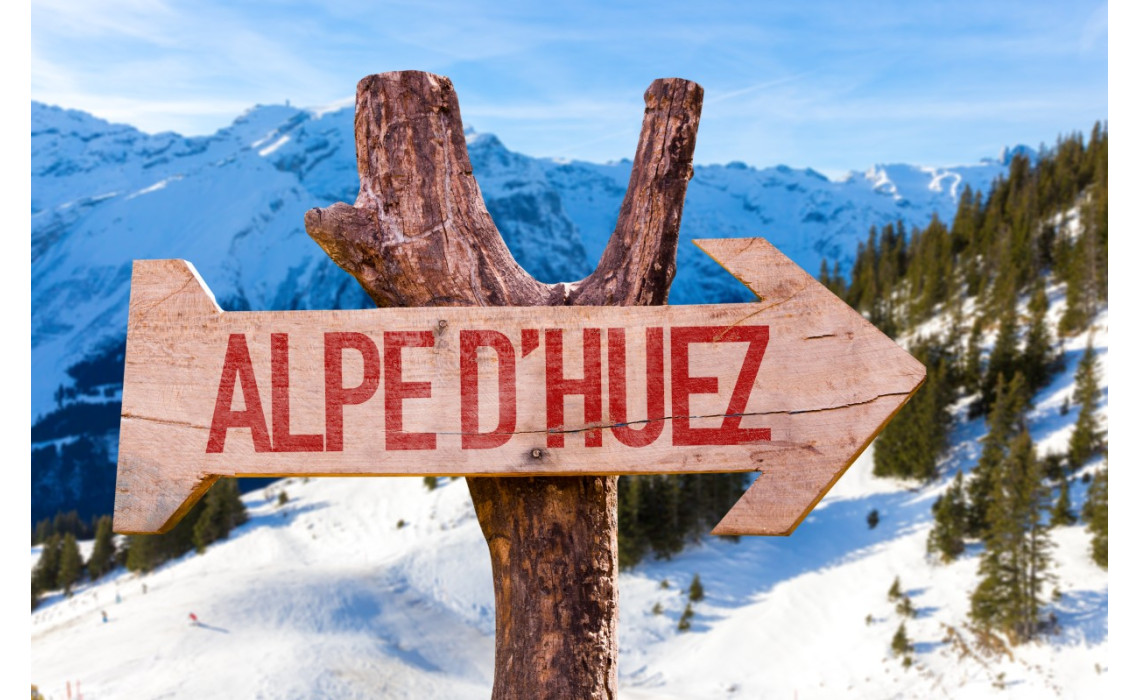
After 153 kilometres and 4,000 metres of climbing, you turn left in Bourg d'Oisans and face the 21 switchbacks of Alpe d'Huez. The famous Dutch corner — bend seven — was draped in orange, crowds ten deep, cowbells, music, noise that somehow pushes you through the lactic acid. I crossed the finish line in 9 hours and 47 minutes, which earns a bronze in the Marmotte classification system. I cried, briefly, and denied it immediately.
La Marmotte is not a race, officially. But it is absolutely a race — against the clock, against the mountain, against the version of yourself that wanted to stop on the Galibier. I would do it again in a heartbeat. I'm already looking at next year's entry. If you want to know what your cycling body is truly capable of, this is where you find out.