The alarm went off at 5:15am in Prato allo Stelvio. I lay in the dark for a full minute, listening to the Adda river rushing somewhere below, telling myself this was going to be fine. It was not going to be fine. It was going to be magnificent.
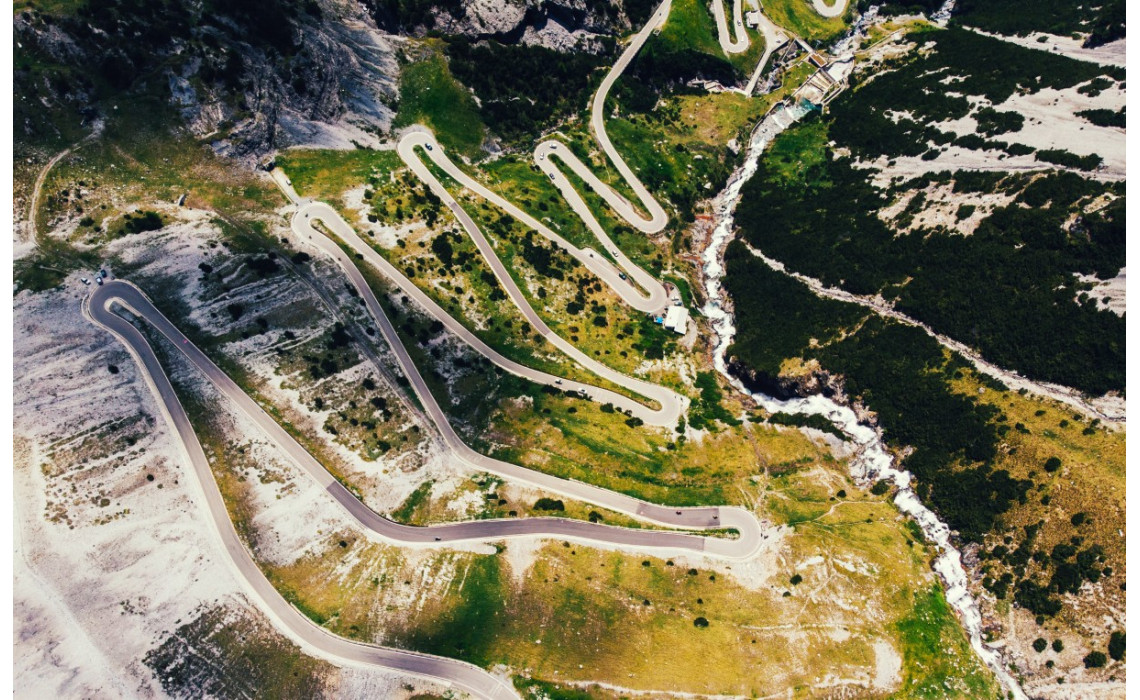
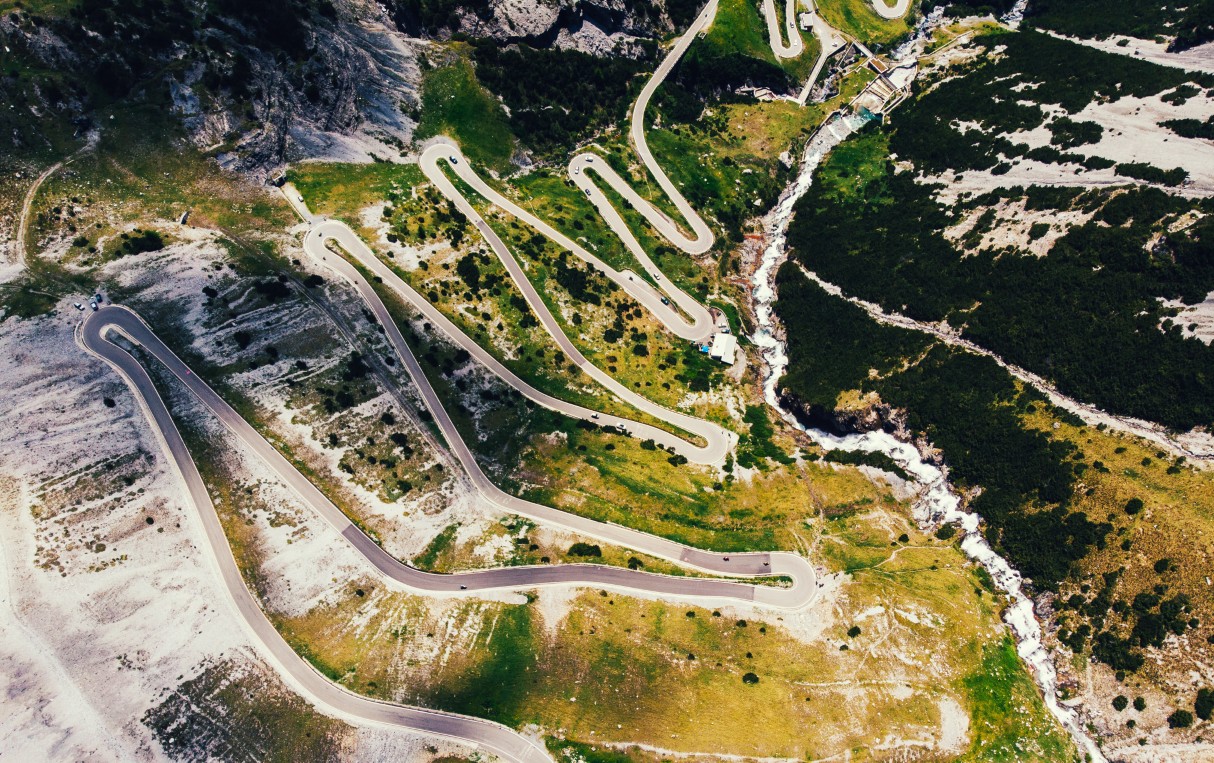
From Prato, the road begins gently enough — a false sense of security that every experienced climber will recognise. The first few kilometres roll through pretty village streets, past farmhouses and early-morning bakeries with their lights still on. Then the road tilts upward, and the famous hairpins begin.
Forty-Eight Reasons to Keep Pedalling
Each hairpin on the Prato side is numbered in white paint on a stone bollard. I started counting at 48 and worked my way down toward 1. It sounds clinical, but that numbering system becomes your entire world on a bad day. At hairpin 34, my legs were burning. At hairpin 22, I stopped pretending I was comfortable and simply settled into survival pace. At hairpin 7, something shifted — I could smell the cold air off the snowfields and hear the wind whipping across the exposed plateau above. That smell alone carried me to the summit.
"The summit of the Stelvio is not an arrival. It is a revelation. You understand immediately why this road exists — not for cars, but for moments like this."
At the top, chaos and beauty coexist in a way that is uniquely Alpine. Tour buses. Souvenir shops. Half a dozen amateur cyclists lying flat on their bikes in a kind of collective exhaustion. And above all of it, an enormous sky — clear, cold, impossibly blue. I pulled on every layer I had for the descent, fingers numb before I had even clipped back in.
Why the Stelvio Belongs on Every Cyclist's List
The Stelvio is not technical. It is not dangerous, if you are sensible on the descent. What it is, is honest. It asks everything of you for roughly two hours, and in return it gives you one of the most dramatic pieces of road on the planet. The views across the Ortler massif from the upper switchbacks are the kind that stop your legs involuntarily — you simply cannot pedal and look at the same time.
I rode it with Purple Velo as part of their Italian Alpine programme, and what made the difference was having the logistics entirely handled — transfers, luggage, the perfectly positioned lunch stop at the bottom in Bormio. You arrive at the base fresh, not frazzled.
If you have ever wondered whether you have what it takes to ride a true Alpine giant, the Stelvio is the answer. Not because it is the hardest — it is not — but because it is the most cinematic, the most rewarding, and the one you will talk about for years. Forty-eight hairpins to heaven. Every single one worth it.